
Dogecoin Guide: What Dogecoin Is and How It Works
Want a practical next step after the basics? Start with our Best Crypto Brokers guide or compare brokers that support crypto deposits.
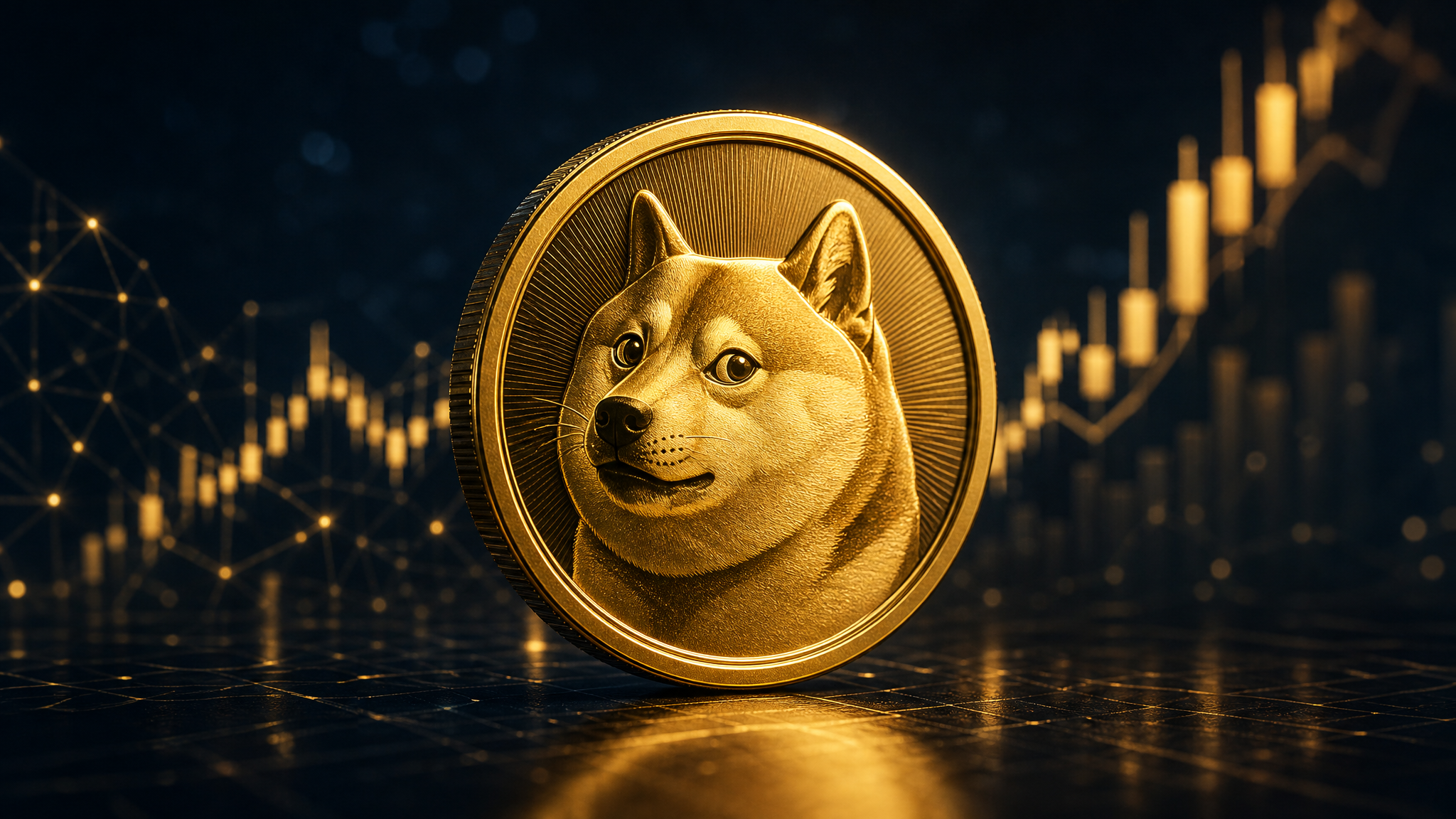
Dogecoin is a cryptocurrency that started as a joke and grew into a real digital asset with a large community, active trading markets, and a weird amount of cultural staying power.
That is the clean answer. The more useful one is this: Dogecoin sits in an awkward middle ground between internet meme, payment coin, and speculative trading vehicle. That is exactly why beginners get confused by it. People talk about DOGE as if it is either harmless fun or the future of money. Neither story is complete.
If you want to understand what Dogecoin actually is, where it came from, how it works, why people still care about it, what makes it different from Bitcoin and other crypto assets, and what a beginner should think through before buying it, this guide will give you the straight version.
Dogecoin in one minute
- Dogecoin is an open-source cryptocurrency that began in 2013 as a meme-inspired project.
- It was created by Billy Markus and Jackson Palmer and became known for its Shiba Inu branding and internet-first community.
- Dogecoin runs on its own blockchain and uses a proof-of-work system related to Litecoin.
- Unlike Bitcoin, Dogecoin does not have a hard maximum supply cap.
- DOGE has been used for tipping, online payments, and speculation, but speculation is a huge part of the story.
- Dogecoin is culturally important in crypto, but that does not make it a safe or high-quality investment by default.
If you are learning Dogecoin because you may want practical next steps afterward, the sensible follow-ups are the best crypto brokers, brokers that support crypto deposits, and our Bitcoin guide.
What is Dogecoin?
Dogecoin is a cryptocurrency designed for peer-to-peer digital transfers on a blockchain network.
In plain English, it is a crypto asset people can send, receive, hold, and trade without one central company controlling the ledger.
What makes Dogecoin different is not some magical technology breakthrough. It is the mix of:
- meme branding
- strong online community culture
- relatively simple payment-coin identity
- deep association with hype cycles and speculative trading
DOGE is the token used on the Dogecoin network. People usually say “Dogecoin” and “DOGE” interchangeably, but the distinction is simple:
- Dogecoin = the network / project
- DOGE = the coin people buy, hold, send, or trade
A lot of beginners first hear about Dogecoin as “the joke coin.” That origin matters, but stopping there misses the point. Dogecoin became a real market asset with real liquidity, real holders, real price swings, and a very real ability to separate impulsive buyers from their money.
Why was Dogecoin created?
Dogecoin was created in late 2013 as a playful alternative to the increasingly serious tone of early crypto.
Billy Markus and Jackson Palmer built it around the famous Shiba Inu “Doge” meme. The idea was not to present Dogecoin as elite financial technology. It was partly satire, partly community experiment, and partly a reminder that crypto culture was already getting a bit ridiculous.
That joke landed harder than expected.
Dogecoin gained traction because it felt more approachable than many early crypto projects. It was less ideological than Bitcoin, less technical than some blockchain platforms, and easier for internet-native communities to rally around.
Its early reputation was tied to:
- tipping creators and users online
- community fundraising campaigns
- charitable stunts and internet-led causes
- a friendlier, less self-important tone than much of crypto
That background still matters because Dogecoin’s identity has always been driven as much by culture as by code.
How Dogecoin works
You do not need to become a blockchain engineer to understand the basics.
The useful mental model is this: Dogecoin is a blockchain-based network where transactions are recorded publicly and verified by a decentralized set of participants.
Blockchain and transactions
Dogecoin uses a blockchain, which is a public ledger of transactions.
When someone sends DOGE, that transaction gets broadcast to the network. Participants on the network verify it, and once confirmed, it becomes part of the transaction history.
That means Dogecoin does not rely on one bank or payment company to update balances behind the scenes.
Proof of work and mining
Dogecoin uses a proof-of-work consensus model.
That means miners use computing power to help validate transactions and secure the network. In exchange, they can earn block rewards.
Dogecoin is closely linked to Litecoin at the technical level. It uses the Scrypt algorithm and has been merge-mined with Litecoin, which helps support network security.
The beginner takeaway is simple:
- miners help keep the network running
- transactions are verified on-chain
- the system is decentralized, but not free from economic incentives or trade-offs
Supply model
This is one of the most important Dogecoin facts to understand.
Unlike Bitcoin, Dogecoin does not have a fixed maximum supply cap.
New DOGE continues to be issued over time. Dogecoin’s long-running issuance model adds 10,000 DOGE per block, which works out to roughly 5 billion new DOGE per year.
That does not automatically make Dogecoin worthless. But it does change the long-term value story.
Bitcoin’s scarcity narrative is built around a capped supply. Dogecoin’s narrative is not.
If someone talks about DOGE as if it has the same hard-scarcity profile as Bitcoin, they either do not understand it or they are selling confidence they have not earned.
Wallets and custody
To hold or use Dogecoin, people typically use a wallet or a platform account.
A wallet helps manage:
- your public address, which others can send DOGE to
- your private keys or access credentials, which control spending
If you use a custodial platform, the provider may manage custody for you. If you use self-custody, you take on more control and more responsibility.
In crypto, convenience and control usually move in opposite directions.
What Dogecoin is used for
Dogecoin has had more real use than many critics admit, but less deep utility than many fans pretend.
1. Tipping and small online transfers
Dogecoin became known early on for tipping culture.
People used DOGE to reward posts, jokes, content, and community participation online. That fit the coin’s low-seriousness, internet-native identity.
2. Payments
Some merchants and services have accepted Dogecoin as a payment option.
Part of the appeal is that Dogecoin transactions can be simple and relatively cheap compared with some other blockchain networks. That said, “can be used for payments” is not the same thing as “widely used as everyday money.” Those are different claims.
3. Trading and speculation
This is now a huge part of the Dogecoin story.
A lot of DOGE demand is driven by:
- short-term speculation
- meme-driven momentum
- celebrity attention
- social media narratives
- hopes of outsized gains from retail trading waves
This does not make Dogecoin fake. It just means price action is often driven more by attention than by fundamentals.
4. Community identity
Dogecoin also functions as a cultural asset.
That sounds fluffy, but it matters. In crypto, community can influence:
- attention
- exchange support
- liquidity
- staying power
- the speed of narrative-driven rallies
Dogecoin’s community and brand recognition are a real part of why it has endured.
Why Dogecoin still matters
A fair beginner question is: if Dogecoin started as a joke, why is anyone still talking about it?
Because jokes with liquidity stop being just jokes.
Dogecoin still matters for a few reasons.
Brand recognition
DOGE is one of the most recognizable names in crypto, even among people who know almost nothing else about the market.
That matters because attention is not a side detail in crypto. Attention is often fuel.
Community persistence
Dogecoin has survived multiple market cycles and still keeps a loyal, visible user base.
A lot of meme coins show up, make noise, and die. Dogecoin stuck around.
Speculative relevance
When markets get frothy, Dogecoin often comes back into focus as a familiar high-volatility trade.
That keeps it relevant to traders even when the underlying use-case story has not changed much.
Cultural role inside crypto
Dogecoin is part of crypto history at this point.
It helped prove that community, humor, internet identity, and market behavior can matter almost as much as technical design. That is not necessarily noble. But it is real.
Dogecoin vs Bitcoin vs other meme coins
This is where beginner confusion usually gets expensive.
Dogecoin vs Bitcoin
Dogecoin and Bitcoin are both cryptocurrencies, but they are not built around the same core story.
Bitcoin is mainly framed as:
- a scarce digital asset
- a decentralized value network
- a long-term macro or store-of-value thesis
Dogecoin is mainly framed as:
- a meme-born crypto asset
- a community-driven payment and tipping coin
- a high-volatility speculative trade
The biggest practical differences include:
- Bitcoin has a hard supply cap; Dogecoin does not.
- Bitcoin’s identity is built around scarcity and monetary discipline; Dogecoin’s is built more around accessibility, culture, and market attention.
- Bitcoin is generally treated as the more serious long-term asset; Dogecoin is more often treated as a sentiment-driven bet.
If you want that broader foundation first, read Bitcoin Explained: What It Is and Why It Matters and Ethereum Guide: What Ethereum Is and How It Works.
Dogecoin vs newer meme coins
Dogecoin is not the only meme coin. It is just the elder statesman of the category, which is a sentence nobody needed in finance but here we are.
Compared with many newer meme coins, Dogecoin usually has:
- stronger brand recognition
- broader exchange availability
- longer market history
- deeper liquidity
- less “just launched yesterday” nonsense
That does not make it safe. It just means it is often more established than the newer meme-coin chaos competing for the same speculative attention.
Dogecoin vs utility-focused crypto projects
Some crypto projects are pitched around smart contracts, app ecosystems, settlement infrastructure, or tokenized financial rails.
Dogecoin is not mainly competing on that level.
Its staying power comes less from technical ambition and more from simplicity, recognizability, and cultural momentum.
That can be enough to keep an asset alive. It is not enough to remove risk.
Why Dogecoin is so volatile
Dogecoin is volatile because its price can be driven hard by sentiment, social media, momentum trading, and retail speculation.
That is the core answer.
A few forces tend to matter most.
Hype sensitivity
Dogecoin reacts strongly to attention.
That includes:
- celebrity mentions
- meme waves
- viral posts
- broader crypto excitement
- trader FOMO
This makes DOGE especially vulnerable to sharp runs and ugly reversals.
Thin fundamental anchor
Some assets have stronger cash-flow, utility, or adoption anchors behind how investors value them.
Dogecoin’s valuation is often looser, which means market mood can move price more violently.
Retail-driven behavior
Dogecoin has a strong retail following.
Retail enthusiasm can create explosive upside during hot periods, but it can also create disorderly selloffs when momentum fades.
Crypto-wide risk cycles
DOGE does not trade in a vacuum.
When crypto markets turn risk-on, Dogecoin can surge. When risk appetite disappears, it can get hit fast.
That is why Dogecoin can look unstoppable right before it looks deeply stupid.
Main risks and trade-offs
Dogecoin is not harmless just because the branding is funny.
Speculation risk
A large share of DOGE demand is speculative.
That means a lot of buying pressure can disappear when hype disappears.
Volatility risk
Dogecoin can make very large moves in short periods.
If you treat that like a fun side detail instead of the main event, you are setting yourself up badly.
Concentration and whale risk
As with many crypto assets, large holders and exchange-controlled wallets can influence market behavior, liquidity, and sentiment narratives.
Beginners do not need to obsess over wallet charts, but they should understand that big-holder dynamics are part of the risk profile.
Narrative dependence
Dogecoin is unusually exposed to mood, attention, and internet culture.
That can work in its favor during rallies. It can also leave the asset looking very exposed when the story cools off.
Weak portfolio-construction logic for many beginners
This is the blunt part.
A lot of people are drawn to Dogecoin not because it fits a disciplined plan, but because it feels familiar, cheap per coin, and socially exciting.
That is a bad investment process.
Cheap-looking unit prices are not the same thing as value.
What beginners should understand before buying DOGE
If you are thinking about buying Dogecoin, keep the following straight.
1. Understand what you are buying
DOGE is not Bitcoin-lite and it is not a guaranteed joke-to-riches ticket.
It is a speculative crypto asset with a strong brand, real liquidity, and a much weaker scarcity story than Bitcoin.
2. Separate entertainment from investing
If you buy Dogecoin because the meme is funny, at least be honest with yourself.
That is not the same thing as having a durable investment thesis.
3. Use a credible platform
If you want practical next steps, compare Best Crypto Brokers and Best Brokers With Crypto Deposits.
Platform quality matters because fees, custody setup, withdrawal options, and security standards are part of the real decision.
4. Keep position size sane
Dogecoin is the kind of asset people often over-size because it feels culturally familiar.
That is backwards. The more narrative-driven and volatile the asset, the more careful sizing matters.
5. Learn basic custody rules
If you use self-custody, understand wallets, recovery phrases, address checks, and phishing risk. If you use a custodial provider, understand the trade-off: less effort, more platform trust.
6. Do not confuse popularity with quality
This is probably the most important beginner takeaway in the whole article.
Dogecoin can be famous, liquid, and culturally relevant without being a strong long-term portfolio asset for every investor.
Those are separate questions.
Bottom line
Dogecoin is a real cryptocurrency that began as a meme and evolved into a widely recognized digital asset with an active market, strong community identity, and a very speculation-heavy reputation.
It matters because it proved that internet culture can shape financial behavior in ridiculous but very real ways. It also matters because DOGE is still actively traded, still widely recognized, and still capable of attracting huge bursts of attention.
But none of that means Dogecoin gets a free pass as an investment.
The sensible beginner view is this: Dogecoin is culturally significant, technically simple enough to understand, and financially risky enough to treat with caution. Learn the basics, respect the volatility, and do not let meme familiarity trick you into lazy decisions.
If your next step is practical research, start with Best Crypto Brokers, Best Brokers With Crypto Deposits, Best Brokers With Crypto Withdrawals, Bitcoin Explained, and Ethereum Guide.